Posts

If a variegated plant starts to grow mostly white, how long can it survive? How many green leaves/how much chlorophyll does a plant need in order to keep growing?

Image
Especially the discussion of selenium. One thing, “ variegated plants ” covers a lot of territory. It’s often difficult to make generalizations about “plants” - there are so many, and so many differences among them. Variegation, in most cases, is an adaptation that developed to help plants survive in an environment where the amount of light has increased from the levels of the originating environment - the white or yellow spaces represent areas with reduced chlorophyll , which means the plant is lowering its metabolism to some degree. When the environmental light reduces, often the variegation in new growth becomes more muted, even disappears entirely . Leaves, or stems, of pure white aren’t unusual in many varieties of variegated plants - the nature of variegation allows the plant to “try” different pigment combinations , so just by chance, occasionally total white comes up, just like total green sometimes comes up. The adaptability of plants capable of variegation al...

What is a 'Syngonium plant'?

Image
Sansevieria is a genus of about 70 species of flowering plants, native to Africa, Madagascar, and southern Asia. Common names include mother-in-law's tongue, devil's tongue, jinn's tongue, bowstring hemp, snake plant, and snake tongue. It is often included in the genus Dracaena; in the APG III classification system, both genera are placed in the family Asparagaceae, subfamily Nolinoideae (formerly the family Ruscaceae). It has also been placed in the former family Dracaenaceae. The leaves of Sansevieria are typically arranged in a rosette around the growing point, although some species are distichous. There is great variation in foliage from within the genus. All species can be divided into one of two basic categories based on their leaves: hard-leaved and soft leaved species. Typically, hard-leaved Sansevieria originates from arid climates, while the soft-leaved species originate from tropical and subtropical regions. Hard-leaved Sansevieria has a number of adap...

What makes ML in Computational Biology especially difficult?

Image
There are several related issues that make ML for computational biology hard. 1- Getting “signal” is challenging. The data often comes with lots of noise and missing values and imputation is hard. Say you are measuring single cell RNA sequence counts, the data comes with considerable noise and lots of things may be dynamically changing during your measurements, it’s challenging to clean it. Vision and NLP are often cleaner. 2- A lot of biological data can be high dimensional in the number of variables that affect them (Curse of dimensionality). Take protein sequence of size 20, there are 20^20 possible sequences, you can barely hope to have collected data about an infinitesimally small fraction of this space, hence if the space itself is not easy (hint: it’s often not), you have a poor chance of making a generalizable model . Even notwithstanding how big the space is, large biological datasets (which may cost millions of dollars to acquire) are of the order of 10^6 samples...

How do Nano-biological computers compare with quantum computers? What are the advantages and disadvantages of each?

Image
DNA computing using algorithmic self-assembly has some of the earmarks of a near term alternative to quantum computing for solving computationally intractable problems. The advantage is the DNA computing is that it is approximately here today while quantum computing remains a gleam in some physicists' eyes . The disadvantage of DNA computing is that individual experiments are needed for each new specific solution (no pun intended) and even automating the process might extend computerized wetware to the limit. Molecular Computation of Solutions to Combinatorial Problems is a blog-like critique of Adelman's paper of the same name.   The critique lists the steps involved and gives an indication of the magnitude of the operations needed to solve on specific solution. "Adleman implemented a five (5)-step procedure and discussed each step thoroughly. The steps are as follows: STEP 1 : Hybridization and Ligation: STEP 2: Polymerase Chain Reaction (PCR) Am...

What are the main differences between plant and animal cells?

Image
The main, obvious difference is that plants in general carry out photosynthesis using an organelle called a chloroplast. They convert (sun) light into chemical energy, glucose. Plants use this chemical energy to grow and reproduce and to feed their neighbor animal cells. Animals cannot carry out photosynthesis. They depend on plants for food somewhere in their food chain. In general animals are motile. Animal cells are “flexible”, without a rigid exterior. Plants have cell walls, a rigid exterior. This can be used like bricks to build strong structures during growth. It is also used to retain pressure inside the cell that likewise aids in the rigid plant structure. That’s a couple of differences. I am sure there are more you can find. Think about how can plant cells grow, divide and reproduce with such a rigid exterior.

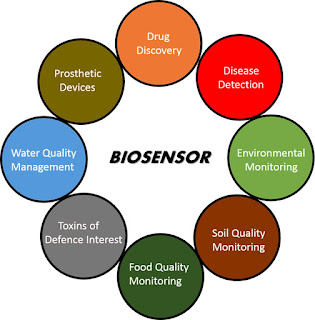
What are benefits of biosensors?

Image
Biosensors are most commonly used within the Healthcare and the Apparel industry. With the use of Biosensors within the healthcare industry, the opportunities are endless. They can be used for monitoring heart rate, respiratory rate, brain activity, or body temperature. However, they also can be used to provide electrical stimulation , or e-stim, to patients to help provide a quicker recovery time on wounds. Within the apparel industry , biosensors can be printed directly into clothing to monitor information for the wearer. Biosensors are commonly being used to monitor a patient’s vitals from a remote location, as well as performance monitoring within the sporting industry. Biosensors make it possible to track muscle activity such as muscle symmetry, or muscle fatigue. They also can monitor distance traveled, jumps, acceleration, force development, and speed.

How does the corona-virus replicate?

Image
Coronaviruses are very unusual, large, enveloped RNA viruses of both medical and veterinary importance. They have a genome of over 30,000 nucleotides (30 K bases) so can be called gigantic in virology sense . They are also slightly unusual in how they replicate themselves at the molecular level. They employ some unusual strategies to accomplish a complex program of gene expression. Coronavirus replication entails ribosome frameshifting during genome translation , the synthesis of both genomic and multiple sub genomic RNA species, and the assembly of progeny virions by a pathway that is unique among enveloped RNA viruses Coronaviruses have a two-step replication mechanism. (Many RNA virus genomes contain a single, large gene that is translated by the cellular machinery of the host to produce all viral proteins). Coronaviruses may contain up to 10 separate genes. Most ribosomes translate the biggest one of these genes, called replicase, which by itself is twice th...