Posts

What is the difference between synthetic biology, biotechnology and biochemistry?

Image
The exact difference between Synthetic Biology and Biotechnology is this: The Synthetic Biologist tries to make an artificial biologic element (enzyme, piece of DNA etc.) in his lab. Whereas the Biotechnologist tries to isolate the biologic element in its natural form without modifying it. The Biotechnologist does not intervene with nature. If he does then he becomes a Synthetic Biologist. Biochemistry on the other hand side associates with Molecular Biology. What differentiates the two Scientists is basically the perspective that see things. The Biochemist is interested mostly in Chemical Reactions, while the Molecular Biologist sees matters more theoretically from the perspective of life and organism. The line that divides both disciplines is not clear though and all matters on Philosophy . Molecular Biology as a discipline that was created as a reaction of several Scientists upon an older common view of Biochemists that the cell was merely a sack with enzymes. Biolog...
How do plants get overwatered?

Image
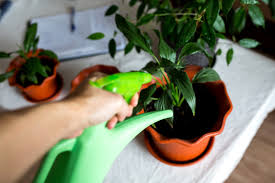
It breaks down into two issues: too much water; and, inadequate drainage. Either or both may happen when too much water is given to plants. It is most applicable to plants in pots, but can also occur with plants in the ground. When you water you are doing a couple of things. You are supplying needed moisture to the root system so it can provide that moisture to the stems and leaves. You are also flushing out some minerals and waste products from metabolic processes occurring in the roots and in the soil. If your potted plants have a drip tray under them and you leave water in the tray, the waste products have nowhere to go except back in to the soil where they become more concentrated. This can lead to soil that is toxic to the roots. Remember that potted plants are in an essentially closed system—unless you flush out the accumulated salts and waste products periodically. The minerals in your water supply will accumulate, possibly to the point of burning the tips of the root...

What are the steps for plant tissue culture?

Image
Basic steps involved in plant tissue culture : Preparation of suitable nutrient medium: MS medium, White’s medium, B5 medium are few culture media. Auxins, cytokines and Gibberellins are the most commonly used growth hormones in culture medium prepared for tissue culture. Agar: It solidifies the medium and acts as a substratum. It doesn’t have any nutritive importance . It is obtained from sea weeds and is used to provide solid surface for growth. All these important nutrients are incorporated in the culture medium and transferred into suitable containers and then sterilized. Selection of explant: Explants are any excised part of the plant to be used in tissue culture like axillary buds, leaf and stem segments, root tip, shoot tip, anther, ovary and endosperm. Always young and healthy parts of plants are selected as explants. Sterilization of the explant: Explants are sterilized by using different types of disinfectants like sodium hypochlorite (2%), silver nit...

Do pesticides affect plant growth? If so, why?

Image
If there were insects destroying your plant and you used an insecticide, it would improve the growth and health of your plant. If a fungus was destroying your plant and you used a fungicide that would also improve the growth of your plant. And if you used an herbicide on your plant, it would die, so that would also affect its growth. Pesticide is a general term that includes insecticides, fungicides and herbicides. Anything that kills any “pest” organism is a pesticide. So pesticides would also include anything with an extreme pH, such as salt, vinegar, wood ash, boric acid and for that matter hot water. https://larixconferences.com/biotechnology/

What is biomedical science about? What do biomedical scientists do?

Image
Biomedical Science is a basic research field which focuses on the aspects of the human body and human health. So you study everything about the human body and about disease progression and treatment. It is a new field in India, but abroad the scope of this field is vast, especially in the UK. The UK has a 'Royal Society of Biomedical Scientists' which has laid down the work profile of a Biomedical Scientist as well. Biomedical Scientists work in a health centre, either a hospital or health research facilities. They do epidemiological analysis of current human diseases and do the necessary research work, or are involved in policy making for combating diseases and it's treatment. In a hospital setting, they are required to assist doctors by telling them about the new treatment methods for a disease and suggest preventive measures as well.

What are the recent breakthrough in bio-science?

Image
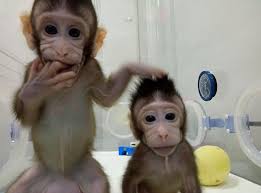
Primate Cloning: Though cloning is a debatable issue from the ethical point of view, it is quite necessary to study biological phenomena. Primates, i.e. the family of apes (which include human beings too) have a very complex genome (genome is the total genetic information contained in a cell of the organism). Hence cloning primates is very difficult. However a group of scientists at Institute of Neuroscience, Shanghai, led by Mu-Ming Poo and Qiang Sun have successfully cloned two healthy monkeys of the variety Long Tailed Macaques named Zhongh and Huahua using the same principles used behind the cloning of Dolly the sheep in 1996. This is a first of its kind successful experiment. The monkeys cloned will be studied respectively to conduct successful research work on human diseases in the near future, especially to study neurological disorders like Parkinson's disease, Alzheimer's disease, etc. As humans belong to the same group as monkeys, i.e. Primata, and their...

What is a good starter plant and advice for a newbie who wants a little more flora in their life?

Image
Crassula ovata. The jade plant. It is a fun little plant that does best with a lot of sunlight and the occasional watering. It will even put out flowers under the right conditions. I have a few jade plants that have been with me 15ish years. Additionally, they are extremely easy to propagate. Just pull off a leaf or cut a stem and put it on dry soil. In a few weeks you might see the start of a new plant. A few pointers: 1. Don’t water too often, but water thoroughly. I usually water mine about once a week because they are i n shallow pots. If they were in a normal flower pot I might cut this down to once every two or three weeks. 2. Don't be afraid to prune. They will actually grow much faster with occasional pruning and weak fertilizer. 3. Pay attention to it. This sounds simple, but if it isn't doing well, catch it early. Try moving it to a spot with different lighting or away from a vent. While there are easier plants you could get, I still have fun with mine af...

If a variegated plant starts to grow mostly white, how long can it survive? How many green leaves/how much chlorophyll does a plant need in order to keep growing?

Image
Especially the discussion of selenium. One thing, “ variegated plants ” covers a lot of territory. It’s often difficult to make generalizations about “plants” - there are so many, and so many differences among them. Variegation, in most cases, is an adaptation that developed to help plants survive in an environment where the amount of light has increased from the levels of the originating environment - the white or yellow spaces represent areas with reduced chlorophyll , which means the plant is lowering its metabolism to some degree. When the environmental light reduces, often the variegation in new growth becomes more muted, even disappears entirely . Leaves, or stems, of pure white aren’t unusual in many varieties of variegated plants - the nature of variegation allows the plant to “try” different pigment combinations , so just by chance, occasionally total white comes up, just like total green sometimes comes up. The adaptability of plants capable of variegation al...

What is a 'Syngonium plant'?

Image
Sansevieria is a genus of about 70 species of flowering plants, native to Africa, Madagascar, and southern Asia. Common names include mother-in-law's tongue, devil's tongue, jinn's tongue, bowstring hemp, snake plant, and snake tongue. It is often included in the genus Dracaena; in the APG III classification system, both genera are placed in the family Asparagaceae, subfamily Nolinoideae (formerly the family Ruscaceae). It has also been placed in the former family Dracaenaceae. The leaves of Sansevieria are typically arranged in a rosette around the growing point, although some species are distichous. There is great variation in foliage from within the genus. All species can be divided into one of two basic categories based on their leaves: hard-leaved and soft leaved species. Typically, hard-leaved Sansevieria originates from arid climates, while the soft-leaved species originate from tropical and subtropical regions. Hard-leaved Sansevieria has a number of adap...

What makes ML in Computational Biology especially difficult?

Image
There are several related issues that make ML for computational biology hard. 1- Getting “signal” is challenging. The data often comes with lots of noise and missing values and imputation is hard. Say you are measuring single cell RNA sequence counts, the data comes with considerable noise and lots of things may be dynamically changing during your measurements, it’s challenging to clean it. Vision and NLP are often cleaner. 2- A lot of biological data can be high dimensional in the number of variables that affect them (Curse of dimensionality). Take protein sequence of size 20, there are 20^20 possible sequences, you can barely hope to have collected data about an infinitesimally small fraction of this space, hence if the space itself is not easy (hint: it’s often not), you have a poor chance of making a generalizable model . Even notwithstanding how big the space is, large biological datasets (which may cost millions of dollars to acquire) are of the order of 10^6 samples...

How do Nano-biological computers compare with quantum computers? What are the advantages and disadvantages of each?

Image
DNA computing using algorithmic self-assembly has some of the earmarks of a near term alternative to quantum computing for solving computationally intractable problems. The advantage is the DNA computing is that it is approximately here today while quantum computing remains a gleam in some physicists' eyes . The disadvantage of DNA computing is that individual experiments are needed for each new specific solution (no pun intended) and even automating the process might extend computerized wetware to the limit. Molecular Computation of Solutions to Combinatorial Problems is a blog-like critique of Adelman's paper of the same name.   The critique lists the steps involved and gives an indication of the magnitude of the operations needed to solve on specific solution. "Adleman implemented a five (5)-step procedure and discussed each step thoroughly. The steps are as follows: STEP 1 : Hybridization and Ligation: STEP 2: Polymerase Chain Reaction (PCR) Am...

What are the main differences between plant and animal cells?

Image
The main, obvious difference is that plants in general carry out photosynthesis using an organelle called a chloroplast. They convert (sun) light into chemical energy, glucose. Plants use this chemical energy to grow and reproduce and to feed their neighbor animal cells. Animals cannot carry out photosynthesis. They depend on plants for food somewhere in their food chain. In general animals are motile. Animal cells are “flexible”, without a rigid exterior. Plants have cell walls, a rigid exterior. This can be used like bricks to build strong structures during growth. It is also used to retain pressure inside the cell that likewise aids in the rigid plant structure. That’s a couple of differences. I am sure there are more you can find. Think about how can plant cells grow, divide and reproduce with such a rigid exterior.

What are benefits of biosensors?

Image
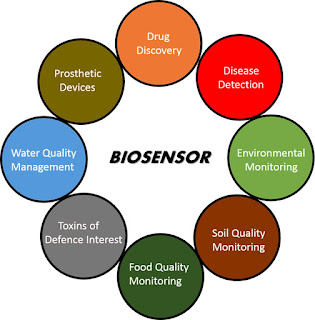
Biosensors are most commonly used within the Healthcare and the Apparel industry. With the use of Biosensors within the healthcare industry, the opportunities are endless. They can be used for monitoring heart rate, respiratory rate, brain activity, or body temperature. However, they also can be used to provide electrical stimulation , or e-stim, to patients to help provide a quicker recovery time on wounds. Within the apparel industry , biosensors can be printed directly into clothing to monitor information for the wearer. Biosensors are commonly being used to monitor a patient’s vitals from a remote location, as well as performance monitoring within the sporting industry. Biosensors make it possible to track muscle activity such as muscle symmetry, or muscle fatigue. They also can monitor distance traveled, jumps, acceleration, force development, and speed.

How does the corona-virus replicate?

Image
Coronaviruses are very unusual, large, enveloped RNA viruses of both medical and veterinary importance. They have a genome of over 30,000 nucleotides (30 K bases) so can be called gigantic in virology sense . They are also slightly unusual in how they replicate themselves at the molecular level. They employ some unusual strategies to accomplish a complex program of gene expression. Coronavirus replication entails ribosome frameshifting during genome translation , the synthesis of both genomic and multiple sub genomic RNA species, and the assembly of progeny virions by a pathway that is unique among enveloped RNA viruses Coronaviruses have a two-step replication mechanism. (Many RNA virus genomes contain a single, large gene that is translated by the cellular machinery of the host to produce all viral proteins). Coronaviruses may contain up to 10 separate genes. Most ribosomes translate the biggest one of these genes, called replicase, which by itself is twice th...

What is PCD in pharma and how we can choose a good PCD pharma franchise?

Image
The increasing demand for a variety of medicines and the continuous requirement to formulate the new products are key contributors to the spending growth in the pharma industry . PCD is the part of the pharma franchise but is offering lucrative business opportunities. Many business-minded individuals are part of the pharma industry. The major benefit that one gets by PCD franchise is less investment and risk. With the increase in the pharma industry the PCD pharma franchise business is also growing tremendously. If you are a newcomer who wants to have your own independent pharma business then PCD franchise can be the best choice for you. We,  Biocorp Lifesciences  is here to answer the most asked question of the newcomers. Know About PCD in Pharma PCD refers to Propaganda Cum Distribution. Basically, PCD is a franchise business. Let’s discuss what a franchise business is. When a company gives rights to an individual to sell its products by their name. Usually, ...

Can Nutritionist cure your Auto-Immune Disease?

Image
There are various kind of Auto immune disorders . This disorder occurs when one self-body cells attack themselves and create a condition of illness, allergy or disease that can manifest in different ways. There are nearly 80 kinds of auto immune diseases identified. Causes are generally unknown. Why does this happen? When does it happen? And why does it happen to certain people? What is the cure? Normally, all cells in our body are compatible to each other. However, each one us over a period of our lifetime, eat, consume allergens (at different degrees) and sometimes genetically inherited that create an imbalance . Some change the way some of our own body cells react. Medical treatment depends on the type and severity of the condition. While treatment usually improves symptoms, they do not typically cure the disease. Solutions are to be implemented long term and take in substantial research to identify triggers and find ways to eliminate them. According to the  best...

What are the different types of bioreactors?

Image
To first understand what a biological reactor might be, I might first need to make you understand what biological materials are. And you will understand why that is in just a short while. So read the whole thing if you want to get a good grip on what you are searching for. Now a biological reactor or a bioreactor as you might call it, is merely a vessel that can support and contain biological materials or biological materials. And now you know I said that to understand bioreactors you might first need to understand what biological materials are. Here’s the short version to biological materials , they are merely composites that are made up of either whole or a part of a living organism, any living organism. Living organism may include tissues, biomass, body fluids, cellular component and the list will go on. Basically any living things that moves and breathes. And yes that’s it. See I wasn’t lying when I said it is going to be a short version . Now coming back to bioreactors, t...

Can a virus or bacteria kill off a whole species of plants?

Image
In Britain a few years ago, the species of tree called the Elm tree suffered attack by a bacterial species which caused the disease known as 'Dutch elm disease' . The trees gradually died and it was thought there were no more left alive, but some live trees of the species were found to have survived and there were also uninfected trees in another country . The same thing happened in Britain at the time of the disease called the plague (around the 1600s) when many died from this disease. Everyone was in danger , but eventually the disease died down and in modern times it is almost unknown. It is a paradox that such bacteria (or even parasitic plants) seem to kill off their food source, or their host, so it seems that if the host to parasites is small in number they could be wiped out, together with the parasite and a bacterial species could wipe out their victim species if there were already very few left.

What is an ochratoxin?

Image
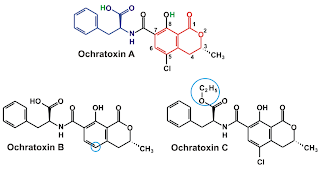
Ochratoxins  are a group of mycotoxins produced by some  Aspergillus  species (mainly A.  ochraceus  and A.  carbonarius , but also by 33% of A.  Niger  industrial strains) and some  Penicillium  species, especially  P. verrucosum . Ochratoxin A is the most prevalent and relevant fungal toxin of this group, while ochratoxins B and C are of lesser importance. Ochratoxin A is known to occur in commodities such as cereals, coffee, dried fruit, and red wine. It is possibly a human carcinogen and is of special interest as it can be accumulated in the meat of animals. Thus, meat and meat products can be contaminated with this toxin. Exposure to ochratoxins through diet can cause acute toxicity in mammalian kidneys. It has been suggested that carriers of alleles associated with phenylketonuria may have been protected from spontaneous abortion caused by ochratoxin exposure, providing a heterozygous advantage for the alleles despi...

How is the life of a biotech researcher?

Image
That depends on your job, education, and sadly the most important of all connections. Life is great in biotech research if you have the right connections. Just networking won’t do. You need to be liked, trusted, and brilliant WITH experience. If you lack one of those things in a niche such as this, you’re facing an uphill battle. On a daily basis you need to be able to schedule your time from the moment you arrive until the moment you leave, leaving room for fixing routine failures of yours AND others. How advanced the technology you are working with is will determine what your schedule needs to account for and how long you need to consider certain things as factors. To account for all of these factors, one essentially needs to be overqualified for the job they are doing. This is not one of those fields where you are hired to fill a position of in which you aren’t completely confident. Biotech is big money, so they don’t let you “fake it until you make it,” as is the ca...